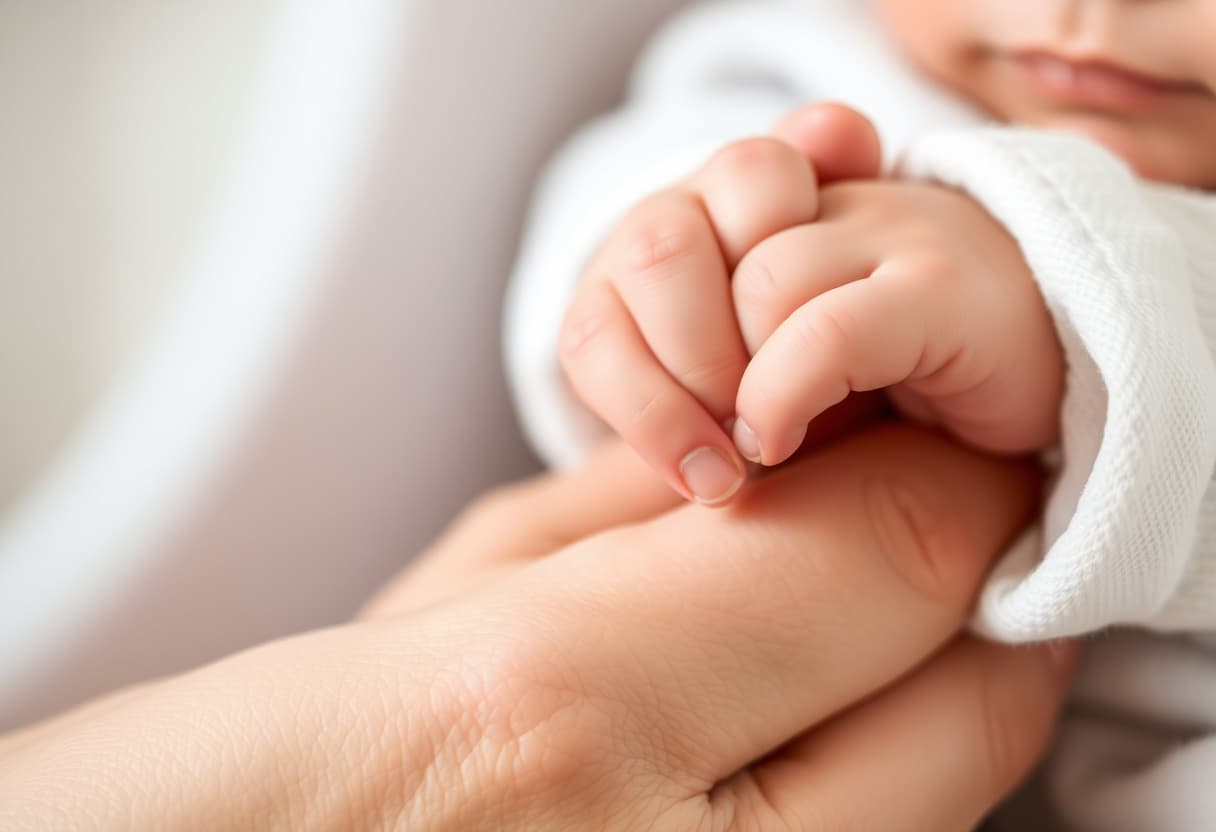
In the years after World War II, John Bowlby — a British psychiatrist and psychoanalyst — undertook a study for the World Health Organization on the mental health of homeless children in post-war Europe. What he found shaped the rest of his career: children who were separated from their primary caregivers, even when their physical needs were met, suffered in ways that conventional psychiatric theory couldn't fully explain.
Bowlby concluded that the drive to form close emotional bonds with caregivers is not derived from hunger or comfort-seeking, as Freudian theory had suggested, but is itself a primary biological need. Infants are biologically programmed to seek proximity to caregivers — not because caregivers feed them, but because in the environment of evolutionary adaptation, proximity to a protective adult was literally a matter of survival. The "attachment system" is the name Bowlby gave to this evolved drive.
The Strange Situation
Bowlby's colleague Mary Ainsworth developed a research paradigm in the late 1960s — the "Strange Situation" — that allowed researchers to observe how infants responded to brief separations from their caregivers and to the presence of a stranger. The patterns she identified have proven remarkably robust across decades and cultures.
Secure attachment: When the caregiver is present, the infant explores freely. When the caregiver leaves, the infant shows distress. When the caregiver returns, the infant quickly settles and returns to exploration. The caregiver has been experienced as a reliable "safe haven" and "secure base."
Anxious-ambivalent attachment: The infant is distressed throughout, even with the caregiver present. When the caregiver returns, the infant is simultaneously clingy and angry — difficult to soothe. This pattern is associated with caregivers who are inconsistently responsive — sometimes available, sometimes not.
Avoidant attachment: The infant shows little distress at separation and little response to reunion, appearing indifferent. This is not actually indifference — physiological measures show elevated stress — but learned suppression of attachment behavior, associated with caregivers who are consistently unresponsive to distress.
A fourth pattern, disorganized attachment, was identified later — associated with caregivers who are themselves frightening or frightened, creating an impossible situation for the child: the source of comfort is also the source of fear.
Attachment is not just a bond — it is a model. Children internalize their experience of caregivers as a template for how relationships work.
Internal Working Models
Bowlby's key theoretical contribution was the concept of "internal working models" — mental representations of the self, the caregiver, and the relationship between them that children build from their early attachment experiences.
A child who experiences consistent, responsive caregiving builds a model in which: "I am worthy of care, others are trustworthy, and relationships are safe." A child whose distress is met with inconsistency builds a model: "My needs might or might not be met; I must monitor the relationship constantly." A child whose distress is met with rejection builds a model: "My needs are a burden; others are unreliable; self-sufficiency is safer."
These models are not conscious beliefs. They are implicit frameworks — operating below deliberate awareness — that shape how people interpret and respond to relationship situations throughout life.
Attachment in Adulthood
Researchers Cindy Hazan and Philip Shaver made a significant leap in 1987: they applied Bowlby's framework to adult romantic relationships and found that the same three basic patterns were observable, expressed now in adult terms. Adults with secure attachment styles tend to find intimacy comfortable, trust their partners, and regulate distress effectively. Those with anxious attachment tend toward preoccupation with the relationship, fear of abandonment, and hyperactivation of the attachment system. Those with avoidant attachment tend toward discomfort with closeness, emotional self-sufficiency, and suppression of attachment needs.
These patterns are not deterministic. Attachment styles are malleable — research shows that secure relationships in adulthood (with partners, with therapists, with consistent friendships) can gradually revise insecure working models. The patterns are influential precisely because they're invisible and automatic; once recognized, they become workable.
The most practically useful takeaway from attachment research is not a diagnosis but an invitation to curiosity: How do I typically respond when I feel close to someone? When conflict arises in relationships I care about? When someone I love pulls away? The answers tend to reveal the early template — and offer a point of entry for deliberate change.
¹ John Bowlby — Attachment and Loss, Vol. 1: Attachment (1969), Basic Books ² Mary Ainsworth et al. — Patterns of Attachment (1978), Lawrence Erlbaum ³ Mary Main — "Recent Studies in Attachment" in Attachment Theory: Social, Developmental, and Clinical Perspectives (1995), Analytic Press