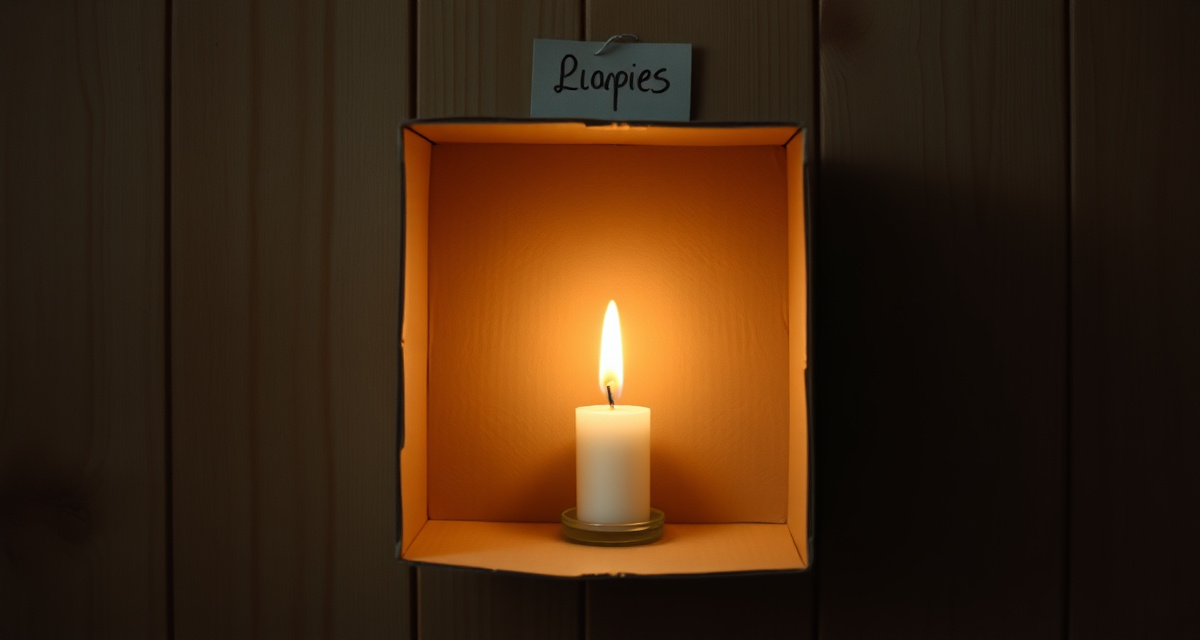
In 1945, the German psychologist Karl Duncker handed his subjects a small candle, a box of thumbtacks, and a book of matches. He asked them to attach the candle to a wall in such a way that wax would not drip onto the table below.
Most people stared at the materials. They tried to tack the candle directly to the wall — it splintered. They tried to melt wax onto the wall as glue — it failed. They struggled.
The answer, when it came to them, was simple. Empty the thumbtacks out of the box. Tack the box to the wall. Put the candle in the box. The wax drips harmlessly into the box.
The reason it took so long is that subjects had seen the box only as a container for thumbtacks. They could not see it as a possible shelf. The box's familiar function had hidden its possible functions. Duncker called this functional fixedness, and seventy years of research has confirmed it as one of the most reliable cognitive blind spots humans have.
What Functional Fixedness Is
Functional fixedness is the tendency to think of objects only in terms of their typical use. We see a hammer as something that drives nails. We do not, automatically, see it as a paperweight, a doorstop, a counterweight, an emergency self-defense tool, a mass for a physics demonstration, or any of the dozens of other things a hammer is.
The bias is powerful precisely because it is efficient. The world contains too many objects to think about each one from scratch every time we encounter it. The brain learns the typical function of each object and tags it for instant retrieval. This works almost all the time — until you are in a situation where the object's typical function is exactly the wrong fit, and you need it to do something else.
In Duncker's famous experiment, the box's role as a container literally hid its possibility as a shelf. Subjects could not see what they were looking at, because they were too busy seeing what they expected.
Why It Persists
Several factors deepen functional fixedness.
Familiarity. Strangely, the more you use an object in its typical role, the harder it becomes to see it differently. In one set of follow-up studies, presenting the box already empty (with thumbtacks scattered loose nearby) dramatically improved performance. The empty box was easier to see as a possible shelf because it was no longer actively performing its container role.
Verbal labels. A 2008 study by Tim German and Margaret Defeyter found that 5-year-olds were less prone to functional fixedness than 7-year-olds. Why? Younger children had not yet fully learned the verbal labels — "this is a box, this is a hammer" — that lock objects into their typical roles. As children acquire more language, they acquire more cognitive shortcuts, and the shortcuts trade flexibility for speed.
Cultural stability. People in technologically stable environments encounter the same objects in the same roles every day. People in resource-scarce environments — where a tin can might be a planter, a percussion instrument, a measuring cup, or a child's toy in a single afternoon — show measurably less functional fixedness in lab studies. Improvisation is a learned skill.
The Stakes Are Higher Than They Seem
Functional fixedness sounds like a charming puzzle-solving quirk. It is more than that.
In medicine, it appears as the failure to recognize that a drug developed for one purpose might treat an unrelated condition. Aspirin's role as a heart-attack preventative was discovered decades after its anti-inflammatory use was established — partly because the cardiovascular effect was hidden under the "this is a pain reliever" label.
In engineering, it shows up as the inability to see that a part designed for one function could solve a different problem. The famous Apollo 13 CO2 scrubber improvisation — using a sock, a flight manual cover, and duct tape to fit a square filter into a round receptacle — was a triumph against functional fixedness under extreme pressure.
In business, it shows up as the inability to see that an existing asset could open a new market. Kodak invented the digital camera in 1975, then suppressed it, because the company could not stop seeing itself as a film business. The digital camera was a threat in the film frame and an opportunity in any other frame.
In personal life, it shows up as the inability to imagine yourself in a role different from the one you've been playing. The reason career changes feel so terrifying is partly that we cannot see ourselves as anything other than what we currently are. We are, in a sense, fixed on our own current function.
How to Overcome It
The good news is that functional fixedness can be deliberately reduced. Several strategies have empirical support.
Use generic descriptions. Instead of "the candle, the matches, and the box of thumbtacks," try describing each object by its physical properties: "a cylinder, a long thin object, a rectangular cardboard structure that contains small metal objects." Stripping away the names releases the objects from their usual roles.
Apply the "alternate uses" exercise. This is a classic creativity test, often credited to J.P. Guilford. Pick any object — a brick, a paperclip — and list as many alternate uses as you can in two minutes. The first few are easy and conventional. The interesting ones come at the end, when your usual associations have been exhausted and your mind starts genuinely searching.
Cross-pollinate. Spend time with people whose work uses different tools and frameworks than yours. Engineers, gardeners, chefs, musicians, programmers — each profession has its own "normal" uses for everyday objects, and exposure to other normals expands your set.
Sleep on it. A 2009 study found that participants who took a break and engaged in unrelated activity solved problems requiring functional fixedness reframing at higher rates than those who kept grinding. The mind, given time, naturally loosens its grip.
Ask "what else could this be?" Make it a habit. Look at the object on the desk in front of you. The pen — could it be a stylus, a stir stick, a pointer, a probe? The mug — could it be a candle holder, a paperweight, a tiny vase? The chair — could it be a stepstool, a desk, a barricade? The exercise is small. The cumulative effect on creative problem-solving is real.
What Functional Fixedness Teaches
The deeper lesson of Duncker's experiment is humbling. The reason the candle problem is hard is not that the answer is complicated. The answer is that you were already looking at the answer the entire time. You just couldn't see it.
That is true of more than candles and boxes. The resources you need are often already in the room. The capability you're looking for is often already in your hands. The next move is often hidden under a label that says, in confident block letters, this is something else.
The work is to look again.