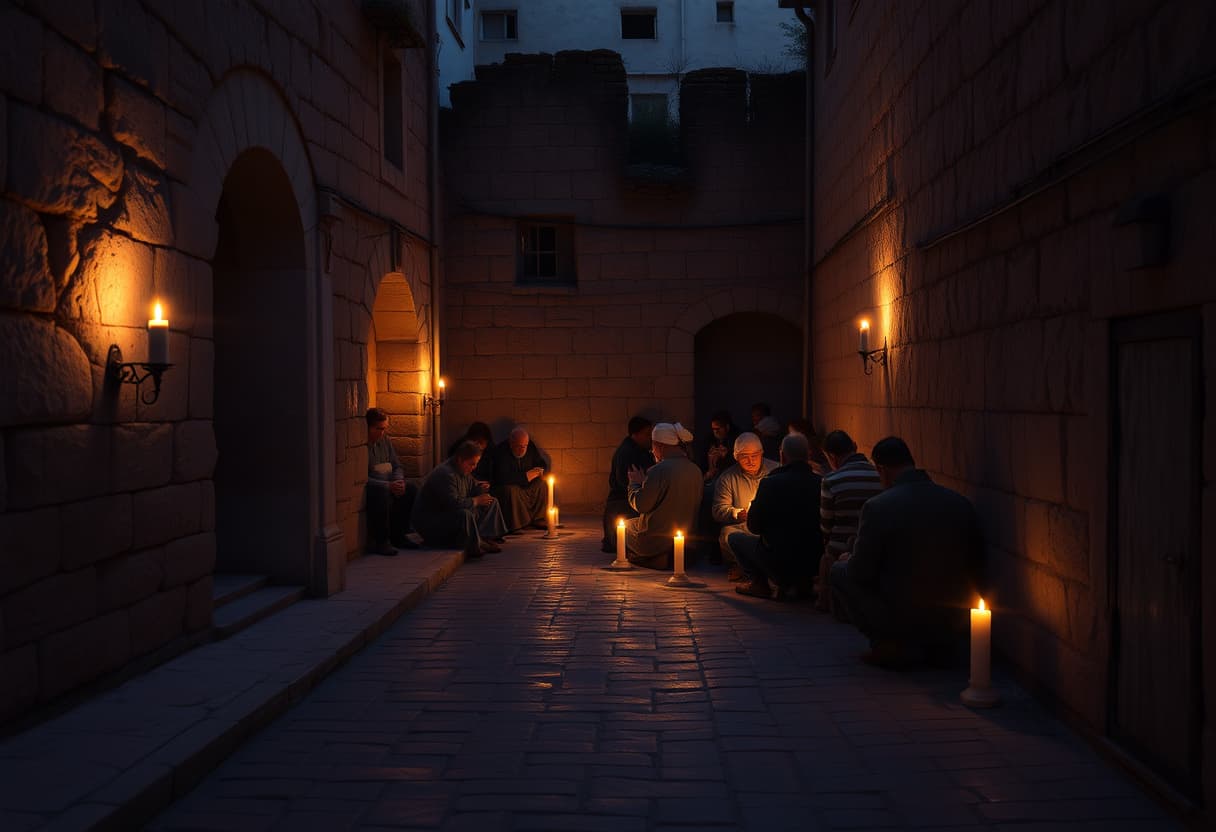
The early church did not spread because it had an empire behind it. For the first three centuries, Christianity was a minority movement with no political power, no tax exemptions, no cathedrals, and no state protection. It spread anyway — rapidly, stubbornly, across some of the most hostile territory in the ancient world. Understanding why it spread tells us something essential about the nature of the faith itself.
A Movement Without a Mechanism
Ancient religions typically succeeded through one of two channels: they were the religion of a particular people (like Judaism or the worship of local deities), or they were adopted by power (as happened with Christianity after Constantine, but that is a different story). The early church fit neither category. It had no ethnic homeland, no imperial patron, and actively preached a message that made its adherents unpopular.
The sociologist Rodney Stark, in his landmark study The Rise of Christianity, argued that the church grew at a remarkably consistent rate — roughly 40 percent per decade — over its first several centuries. That figure is striking not for its speed but for its steadiness. This was not a viral moment or a political coup. It was organic, person-to-person, relationship-by-relationship growth.
"Christianity was a mass movement, grounded in a highly motivated laity." — Rodney Stark
What drove it? Stark points to several social factors: Christians cared for the sick during plagues when others fled, they had unusually strong networks of mutual aid, and they offered women a higher social status than most surrounding cultures. These are not the whole story, but they point toward something the early believers understood intuitively — the gospel was meant to be embodied as well as proclaimed.
The Role of Witness and Suffering
The early church father Tertullian wrote a famous line to the Roman authorities: "The blood of the martyrs is the seed of the church." This was not bravado. It was observation. Public executions of Christians were intended as warnings. What the Roman authorities did not anticipate was that the willingness of believers to die for their convictions would strike observers as strange — and then compelling.
Martyrdom in the Roman world was not unknown, but it was typically associated with soldiers dying for the state or philosophers dying for their dignity. Christians dying for a crucified Jew from Galilee was another matter entirely. It provoked a question: What do these people know that I don't?
The apologist Justin Martyr, writing in the second century, explicitly credited his conversion to watching Christians face death without fear. He was a trained philosopher, someone who had moved through various schools searching for truth. It was not an argument that convinced him — it was a life.¹
A Theology Built for Outsiders
There is something in the content of the Christian message itself that aided its spread. In a world rigidly stratified by class, ethnicity, and gender, the apostle Paul wrote to the Galatians: "There is neither Jew nor Gentile, neither slave nor free, nor is there male and female, for you are all one in Christ Jesus" (Galatians 3:28). This was not a social program. It was a theological statement about identity and belonging in Christ.
But theology has social consequences. Early churches were places where a Roman senator and a former slave might eat the same meal and call each other brother. That was either a scandal or a wonder, depending on your perspective. For many people at the margins of Roman society — women, slaves, the urban poor, immigrants — it was deeply attractive.
The Incarnation itself carries this logic. The doctrine that God became human — not a philosopher-king or demigod, but a carpenter who worked with his hands and ate with social outcasts — communicated something about the nature of God that no previous religion had proclaimed quite so directly. God was not merely distant and powerful; God had entered the mess of human life.
Persecution as Pressure, Not Extinction
One of the paradoxes of early church history is that persecution did not generally destroy the movement. It scattered it. When Stephen was martyred in Jerusalem and a wave of persecution broke out (Acts 8), the believers dispersed — and they preached as they went. The geographical spread of Christianity in its first century owes much to this pattern: the community was broken up, and each fragment carried the seed.
This is not a triumphalist claim that suffering is always redemptive. The suffering was real, the losses genuine. But early Christians interpreted their situation through the lens of a crucified and risen Lord, which meant that death was not the end, and loss was not the final word. That theological framework made them, paradoxically, very hard to stop.
What the Early Church Teaches Us
The story of early Christianity is not primarily an argument for miracles, though believers affirm those too. It is a case study in what happens when a community genuinely lives what it believes. The early church was not perfect — Paul's letters are full of corrections, conflicts, and failures. But it had enough coherence between its confession and its conduct to attract notice in a cynical world.
That coherence is what Tertullian recorded when he wrote that pagans observed Christians and said, "See how they love one another." The claim was not that Christians always succeeded. The claim was that the quality of the love was unmistakable when it was present — and that it pointed somewhere beyond itself.
The earliest Christians believed they were not maintaining an institution but announcing a fact: that something had happened in history that changed everything. That conviction shaped how they lived, how they died, and how they told the story to anyone who would listen. It turns out that is still a pretty effective way to spread a message.
Sources ¹ Justin Martyr — Second Apology, Chapter 12 (c. 155 AD) ² Rodney Stark — The Rise of Christianity (1996) ³ Tertullian — Apology, Chapter 39 (c. 197 AD)