Every biology textbook teaches a few foundational rules. Living things carry information in DNA. Genes code for proteins. Proteins, in turn, fold into specific shapes and do the cell's work. Infections are caused by organisms — bacteria, viruses, fungi, parasites — each with their own genetic material.
Then came prions, and several of those rules broke at once.
A prion is an infectious agent made entirely of protein. It contains no DNA, no RNA, no genetic material of any kind. It replicates not by copying a genome but by inducing other proteins to change shape. When it enters a new host, it finds a normal version of the protein already present in the host's brain, and forces it to adopt the misfolded form. That new misfolded protein then does the same to its neighbors. The process cascades.
When the scientist Stanley Prusiner proposed this in the early 1980s, it was considered so unlikely — so contrary to the established understanding of how infections work — that his career nearly ended. Today, he holds the 1997 Nobel Prize in Physiology or Medicine, and prions are recognized as the agents behind a small but uniformly fatal class of neurological diseases in humans and animals.
What the Word Actually Means
Prusiner coined the term prion in 1982 as a contraction of "proteinaceous infectious particle." It was an awkward neologism partly because he wanted to signal how strange the thing was. Prions are not viruses (which have genetic material). They are not bacteria (which are cellular). They are misfolded copies of a protein every mammal already makes — PrP, or prion protein — that has adopted an abnormal conformation capable of propagating itself.
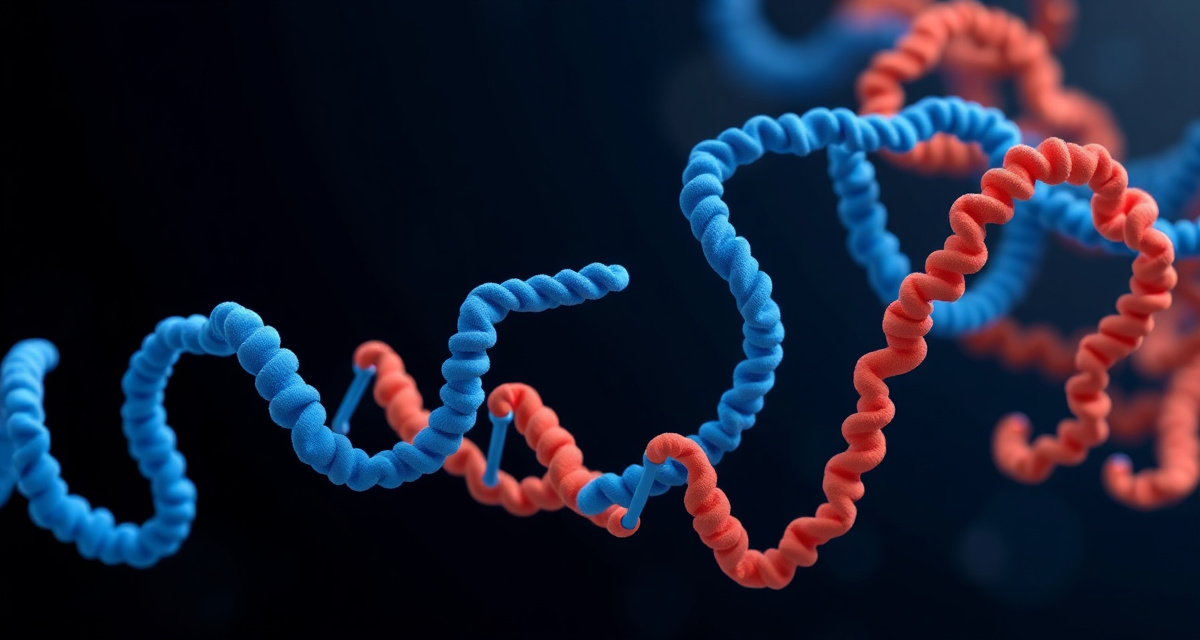
The normal, properly folded version is called PrPC (for "cellular"). The infectious misfolded version is called PrPSc (for "scrapie," the first disease in which it was identified, in sheep). The two have identical amino acid sequences. They are, chemically, the same protein. They differ only in shape.
This was what rattled the biological establishment. Information, it was always assumed, flowed from nucleic acids to proteins. Prions appear to show information — specifically, the information about how to fold — being propagated between proteins, without any genetic material involved.
The Diseases
Prion diseases, also called transmissible spongiform encephalopathies, produce a characteristic pattern: progressive, untreatable neurological decline, with a distinctive "spongy" appearance in brain tissue under the microscope. The misfolded proteins resist destruction by the ordinary cellular machinery, accumulate in brain tissue, and eventually kill neurons.
Known prion diseases include:
- Scrapie, in sheep and goats, first described in the 1730s.
- Bovine spongiform encephalopathy (BSE), or "mad cow disease," which triggered a public health crisis in the United Kingdom in the 1980s and 1990s. Contaminated beef products transmitted the disease to humans, producing a variant of Creutzfeldt-Jakob disease (vCJD).
- Classic Creutzfeldt-Jakob disease (CJD), a rare, rapidly progressive dementia in humans, occurring about one in a million people per year. Most cases are sporadic; some are genetic; a small number are acquired through medical exposure.
- Kuru, the famous disease once observed among the Fore people of Papua New Guinea, transmitted through funerary cannibalism before the practice ended. Carleton Gajdusek's work on kuru in the 1950s and 60s won the 1976 Nobel Prize and laid the groundwork for prion research.
- Chronic wasting disease (CWD) in deer, elk, and moose — currently spreading across North America's wild cervid populations.
- Fatal familial insomnia, a devastating genetic prion disease in which patients progressively lose the ability to sleep.
All known prion diseases are ultimately fatal. There are no approved cures.
Why Prions Are So Hard to Destroy
Ordinary disinfection procedures — heat, radiation, standard autoclaving, alcohol — are designed to damage nucleic acids or disrupt cellular structures. Prions, being pure protein in a very stable misfolded conformation, are terrifyingly resistant to these. They survive temperatures that would sterilize bacteria. They survive formalin fixation. They survive most hospital sterilization protocols.
Surgical instruments used on patients with CJD have been implicated in iatrogenic transmission, because standard sterilization was insufficient. Modern protocols for prion-suspected cases use extremely aggressive treatments: sodium hydroxide, prolonged autoclaving at very high temperatures, or dedicated single-use instruments.
The "Protein-Only" Hypothesis
For more than a decade after Prusiner's proposal, many biologists were skeptical. The "protein-only" hypothesis — that a protein alone could be infectious — seemed too radical. Surely there must be a hidden virus or a tiny nucleic acid component yet to be found.
The evidence accumulated slowly but decisively. Infectious prion material was treated with every known agent designed to destroy nucleic acids — and retained its infectivity. When researchers eventually created purified recombinant prion protein in the lab, misfolded it into the pathogenic conformation, and used it to infect mice, the mice developed the disease. The protein, with no genetic material at all, was sufficient.
By the time Prusiner received the Nobel Prize in 1997, the protein-only hypothesis was the consensus view. Today, it is regarded as established biology.
Prion-Like Proteins Are Everywhere
One of the most striking discoveries of the past twenty years is that the mechanism pioneered by prions — self-templating protein misfolding — is not as exotic as it once seemed. Many other neurodegenerative diseases appear to involve prion-like dynamics.
Alzheimer's disease is associated with aggregates of amyloid-β and tau proteins. Parkinson's disease involves aggregates of α-synuclein. ALS and frontotemporal dementia involve TDP-43. In each case, evidence has accumulated that misfolded versions of these proteins can seed the misfolding of normal versions — spreading from cell to cell in a way that looks strikingly like prion behavior.
This does not mean Alzheimer's is "contagious" in the way kuru was. Most such spreading appears confined within a single nervous system, not transmissible between individuals under normal circumstances. But the shared mechanism has reshaped how neurologists think about neurodegenerative disease generally.
The study of prions, which began with a mysterious sheep disorder most biologists ignored, has opened a new window onto a family of the most serious illnesses of old age.
A Bigger Lesson
There is something worth pausing over in the story of prions. The reason Prusiner was so resisted was not stupidity on the part of his critics. It was the strength of an existing paradigm: information flows from DNA to RNA to protein. That paradigm was correct in general — it was just not the whole story.
Biology is full of exceptions. Some of them, when investigated seriously, turn out to unlock entirely new frameworks for understanding disease, development, and life itself. The prion story is a good reminder that when a careful researcher finds something that looks impossible under current assumptions, the right response is not to dismiss the finding — it is to check the assumptions.
Prions broke a rule. They taught us something the cell had been doing all along, just quietly, in ways we hadn't known to look for. The rules were incomplete, and the work of finding what they missed has barely begun.