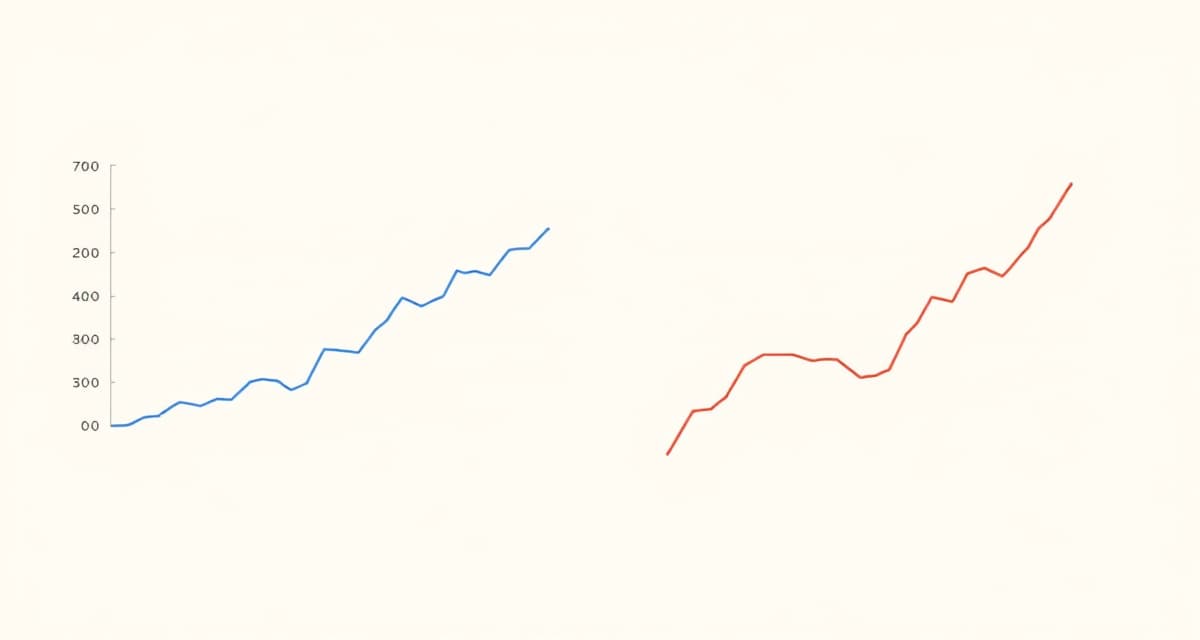
Most retirement planning advice focuses on two numbers: how much you save and what return you earn. But there's a third variable that can matter just as much — and almost nobody talks about it: the order in which your returns arrive.
This is called sequence-of-returns risk, and it's one of the most important concepts in retirement finance. Two retirees can earn the exact same average return over 30 years and end up with wildly different outcomes — depending on whether the bad years came early or late.
A Simple Example
Imagine two retirees. Both start with $1 million. Both withdraw $50,000 per year. Both earn an average annual return of 7% over 20 years. The only difference is the sequence.
Retiree A gets strong returns in the first decade and poor returns in the second. Retiree B gets poor returns first and strong returns later. Despite having the same average return and the same withdrawal rate, Retiree B runs out of money years before Retiree A.
Why? Because when you're withdrawing from a portfolio, early losses are devastating. If the market drops 20% in your first year of retirement, you've lost money on your entire portfolio — and then you withdraw $50,000 from a diminished base. That money is permanently gone. It can never participate in the recovery. The mathematical damage compounds in reverse.
When you're still accumulating — adding money every month — a market crash is actually helpful. You buy more shares at lower prices. But when you're distributing, the math flips. Early losses combined with withdrawals create a negative compounding spiral that can drain a portfolio far faster than the average return would suggest.
The Research
Financial planner William Bengen published the foundational research on this topic in 1994 in the Journal of Financial Planning. His question was deceptively simple: what is the maximum percentage a retiree can withdraw from a balanced portfolio each year and still have money left after 30 years, regardless of when they retire?
His answer — the now-famous 4% rule — was based on historical data going back to 1926. The worst-case scenarios weren't the periods with the lowest average returns. They were the periods where bad returns clustered at the beginning: retirees who started withdrawing in the late 1960s and early 1970s, just before a prolonged bear market combined with high inflation.
A subsequent study by Wade Pfau at the American College of Financial Services examined retirement outcomes across different countries and historical periods and confirmed the pattern: sequence risk, not average return, is the primary determinant of whether a retiree's portfolio survives.
The Retirement Red Zone
Financial planners sometimes call the five years before and five years after retirement the "retirement red zone" — the period when sequence risk is most dangerous. During this window, your portfolio is at or near its maximum size, and you're either about to start withdrawing or have just started. A major market downturn during this period can permanently impair your retirement.
Consider two real historical examples. Someone who retired in January 1995 experienced five years of extraordinary gains before the dot-com crash, by which point their portfolio had grown so large that the losses were manageable. Someone who retired in January 2000 experienced the crash immediately, followed by a weak recovery and then the 2008 financial crisis. Same withdrawal rate, similar portfolio — radically different outcomes.
What You Can Do About It
Sequence-of-returns risk can't be eliminated, but it can be managed:
Build a cash reserve. Having one to three years of living expenses in cash or short-term bonds means you don't have to sell stocks during a downturn. This "cash buffer" strategy lets your equity portfolio recover while you draw from safe assets.
Use a flexible withdrawal strategy. Instead of withdrawing a fixed dollar amount, consider adjusting your withdrawals based on portfolio performance. In good years, take a little more. In bad years, tighten spending. Research by Jonathan Guyton and William Klinger, published in the Journal of Financial Planning in 2006, showed that flexible "guardrail" withdrawal rules significantly improved portfolio survival rates.
Consider a bond tent. This strategy involves temporarily increasing your bond allocation in the years surrounding retirement — perhaps to 50% or 60% — and then gradually shifting back toward stocks over the first decade of retirement. The idea is to reduce equity exposure precisely during the window when sequence risk is highest, then re-introduce growth potential once the danger zone has passed.
Delay Social Security. Every year you delay claiming Social Security between ages 62 and 70, your benefit increases by roughly 7–8%. This acts as a form of longevity insurance and reduces the amount you need to withdraw from your portfolio in the early, vulnerable years.
The Uncomfortable Truth
Sequence-of-returns risk is unsettling because it introduces an element of luck into retirement planning. You can do everything right — save diligently, invest wisely, keep costs low — and still face a poor outcome if a bear market arrives in your first few years of retirement. Conversely, someone who saved less but retired into a bull market may coast.
This doesn't mean planning is pointless. It means that planning must account for the possibility of bad timing. The retirees who fare worst are those who assume average returns will arrive in an orderly fashion and make no provision for the alternative.
The average return of a portfolio is a useful number for accumulation. But once you start withdrawing, the path of returns matters as much as the destination. Knowing this is the first step toward planning for it.