Every Sunday in churches across the world, Christians stand and recite the Apostles' Creed. They confess that Jesus was born of the virgin Mary, suffered under Pontius Pilate, was crucified, died, rose on the third day, and ascended into heaven, where he is seated at the right hand of the Father.
Most of those lines get preached on regularly. One rarely does. The Ascension, which has its own feast day, its own place in the biblical narrative, and its own theological weight, has quietly become the most neglected doctrine in mainstream Christian teaching.
That neglect is a problem, because the Ascension is not a pious afterthought to the Resurrection. It is the event that makes sense of everything that follows.
What actually happened
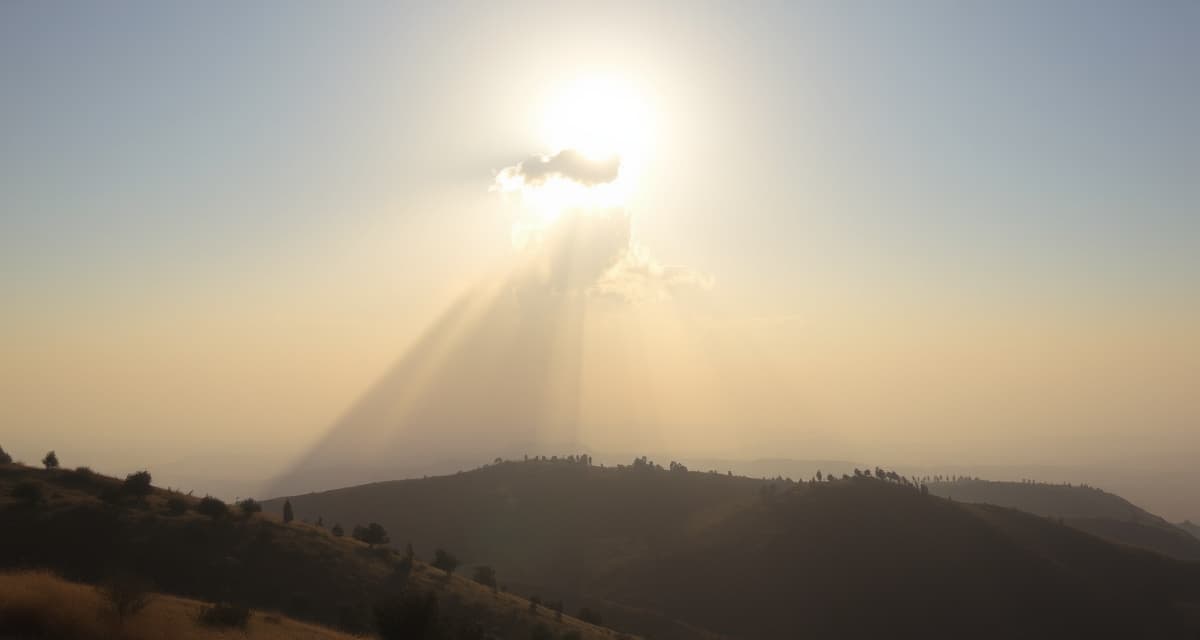
The Ascension is described in Luke 24 and in the opening chapter of Acts. Forty days after the resurrection, Jesus gathers his disciples, gives them their final instructions, and is lifted up before their eyes until a cloud takes him out of their sight.
And while they were gazing into heaven as he went, behold, two men stood by them in white robes, and said, "Men of Galilee, why do you stand looking into heaven? This Jesus, who was taken up from you into heaven, will come in the same way as you saw him go into heaven." (Acts 1:10-11)
The event marks the end of the post-resurrection appearances and the beginning of the church age. Ten days later, the Spirit falls at Pentecost. The two events are bound together in the logic of the New Testament: Jesus ascends, and then his Spirit comes.
"Seated at the right hand of the Father" — why this matters
The creed does not just say Jesus ascended. It says he ascended to a place and a position: seated at the right hand of the Father. This phrase, drawn from Psalm 110:1, was quoted by Jesus himself and then cited more times in the New Testament than almost any other Old Testament verse.
In ancient royal courts, the right hand of the king was the place of authority. To sit there was to share the king's rule. So when the New Testament writers say Jesus is seated at the right hand of God, they are making a specific and enormous claim: the crucified carpenter from Nazareth is now ruling. Not metaphorically. Not eventually. Now.
This is what the Ascension means before it means anything else. It is the enthronement of Jesus. The cross was not the end; the resurrection was not the end; the ascension is the moment when the story reaches its rightful conclusion, with the faithful Son installed as king over everything.
Paul writes in Philippians that because of the cross, God "highly exalted him and bestowed on him the name that is above every name, so that at the name of Jesus every knee should bow" (Philippians 2:9-10). Hebrews opens by saying that the Son, "after making purification for sins, sat down at the right hand of the Majesty on high" (Hebrews 1:3). That sat down is theological. The work was done. The king was seated.
Why the body matters
The Ascension is also a statement about what kind of king is reigning. Jesus did not shed his humanity at the Ascension. He took it with him.
The New Testament insists that the same resurrected body that ate fish with the disciples is the body that ascended. A real human body — glorified, transformed, but still human — is now seated on the throne of the universe. This is not a small claim. It is the reason Christianity has never been a spiritualist religion, has never taught that the material world is to be escaped, and has always treated embodied human life as eternally significant.
If God the Son is now and forever an embodied human, then human bodies matter to God. The doctrine of the Ascension is one of the firmest guards the church has against every theology that tries to downgrade physical existence.
The Ascension and prayer
Hebrews develops another implication. The ascended Christ is now our great high priest, "who has passed through the heavens" (Hebrews 4:14) and "always lives to make intercession" for us (Hebrews 7:25).
This is the biblical basis for the confidence of Christian prayer. When believers pray "in Jesus' name," they are praying through a mediator who is genuinely in the Father's presence, not as a distant memory or an abstract principle, but as a living, reigning, praying human. The Ascension is why prayer is not a hopeful gesture into the void. It is a conversation with the Father carried on by, and through, the Son.
The Ascension and the church
One more consequence, and perhaps the most practical. In John 16, Jesus says something startling to his disciples:
It is to your advantage that I go away, for if I do not go away, the Helper will not come to you. (John 16:7)
The Ascension is the condition for Pentecost. Jesus, in his risen-but-still-present body, was necessarily in one place at a time. After the Ascension, through the Spirit, he is present everywhere his church is gathered. The Ascension is not Jesus leaving. It is Jesus changing the mode of his presence so that he can be with every believer everywhere at once.
The church exists, in this sense, because he ascended. Every local congregation is a beachhead of the ascended king's reign, held together by the Spirit he sent down from his throne.
The Ascension and the end of the story
Finally, the Ascension points forward. The men in white robes do not tell the disciples to stop looking at the sky because Jesus is gone for good. They tell them he will come again "in the same way." The Ascension is not the final page of the story. It is the chapter break between the in-person ministry of Jesus and his return in glory.
The church lives in between. The king is already on the throne. The kingdom has not yet come in its fullness. Our prayers, our work, our endurance all take place in that space.
Why we should recover it
The Ascension has suffered from being easy to misunderstand and easy to skip. But it is not a quaint physical event that the modern church has to explain away. It is the hinge on which the rest of the New Testament turns.
The crucified Jesus is alive. The risen Jesus has been enthroned. The enthroned Jesus is praying for you. The praying Jesus has sent his Spirit. And he will return, in the same way his disciples saw him go.
He ascended into heaven and is seated at the right hand of the Father.
It is the shortest line in the creed, and one of the largest claims the church has ever made. Worth standing up for on Sundays. Worth thinking about during the week.