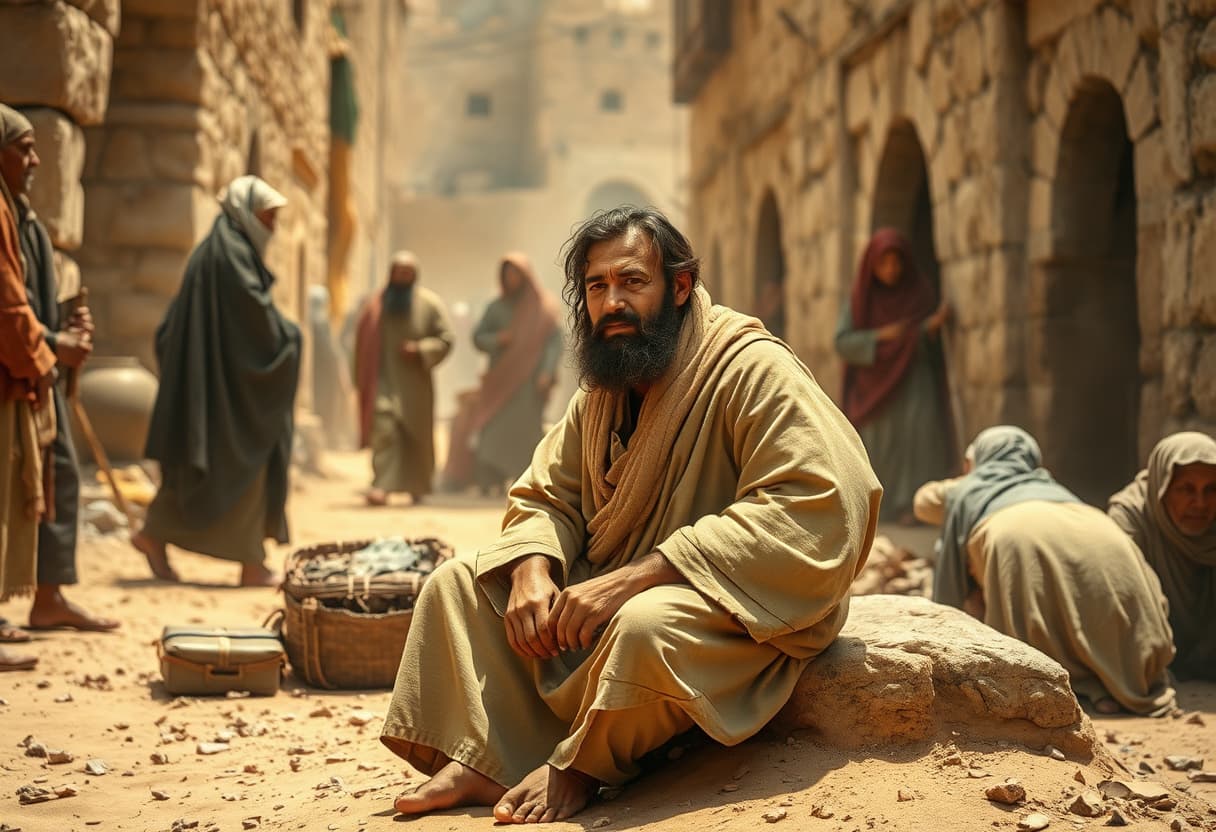
The Sermon on the Mount begins with a series of declarations that would have startled everyone who heard them. "Blessed are the poor in spirit." "Blessed are those who mourn." "Blessed are the meek." These are not the people ancient listeners would have associated with divine favor.
To understand why, we need to understand what Jesus meant by "blessed" — and what his audience expected him to mean.
The Greek Word and What It Actually Means
The word translated "blessed" in most English Bibles is the Greek makarios. In classical usage, it described the state of the gods — those free from the anxieties and limitations that burden human life. When applied to humans, it described people who had achieved enviable good fortune: prosperity, health, social honor.
By the time of Jesus, makarios carried this freight of meaning. A blessed person was someone visibly favored — not just by luck, but in the ancient world, by God. Poverty, mourning, and persecution were taken as signs of divine disfavor. The inverse was also assumed: wealth and social standing reflected divine approval.
Jesus inverts this entirely.
"Blessed are the poor in spirit, for theirs is the kingdom of heaven."
This is not a promise that poverty of spirit will eventually be rewarded. It is a present-tense declaration: theirs is the kingdom. The reversal is immediate and total.
What "Poor in Spirit" Means
The phrase "poor in spirit" has been interpreted variously as intellectual humility, spiritual bankruptcy, or freedom from pride. The most compelling reading connects it to the Hebrew anawim — a word meaning the poor, the lowly, those utterly dependent on God rather than on their own resources.
In the Psalms and the prophets, the anawim are the faithful remnant who have nothing to rely on but God. They are not spiritually deficient; they are spiritually honest. They have stopped pretending to be self-sufficient.
This is why the beatitude carries such force: it blesses people who have nothing to protect and no illusions to maintain. The kingdom of God belongs to those who know they cannot build it themselves.
Mourning, Meekness, and Hunger
The beatitudes that follow extend this logic. Those who mourn will be comforted — not because mourning is noble, but because God enters the spaces where we are least defended. The meek will inherit the earth — the meek being not the passive but the controlled, those who have power and choose not to deploy it for their own benefit.
"Blessed are those who hunger and thirst for righteousness" reframes desire itself. Not the hunger for comfort or security or social standing, but for dikaiosynē — justice, right-relatedness, the world ordered as God intends it. This hunger will be satisfied.
The Peacemakers and the Persecuted
The later beatitudes extend toward the social and the costly. Peacemakers are called children of God — not those who avoid conflict, but those who actively work to restore broken relationships. And the persecuted? Those who suffer for doing what is right are promised the kingdom — the same present-tense gift given to the poor in spirit.
The final beatitude is the most provocative: "Blessed are you when people insult you, persecute you and falsely say all kinds of evil against you because of me." Jesus is not glorifying suffering. He is telling his followers that faithfulness sometimes produces opposition, and that opposition does not mean abandonment.
Why This Still Matters
The beatitudes are not a self-help program or a set of virtues to cultivate. They are a description of the kind of people who find themselves in the presence of God — not because they earned it, but because they stopped pretending they could.
In every generation, they challenge the assumption that divine favor looks like worldly success. They suggest that the geography of grace is often found at the edges of what we consider enviable: in grief, in vulnerability, in the long work of making peace.
If you have ever found yourself in one of these beatitudes — poor, mourning, hungry for something that cannot be bought — Jesus is saying something directly to you.
¹ N.T. Wright — Matthew for Everyone (2002), SPCK ² Dallas Willard — The Divine Conspiracy (1998), HarperCollins ³ Scot McKnight — Sermon on the Mount (2013), Zondervan