A Heap of Trouble
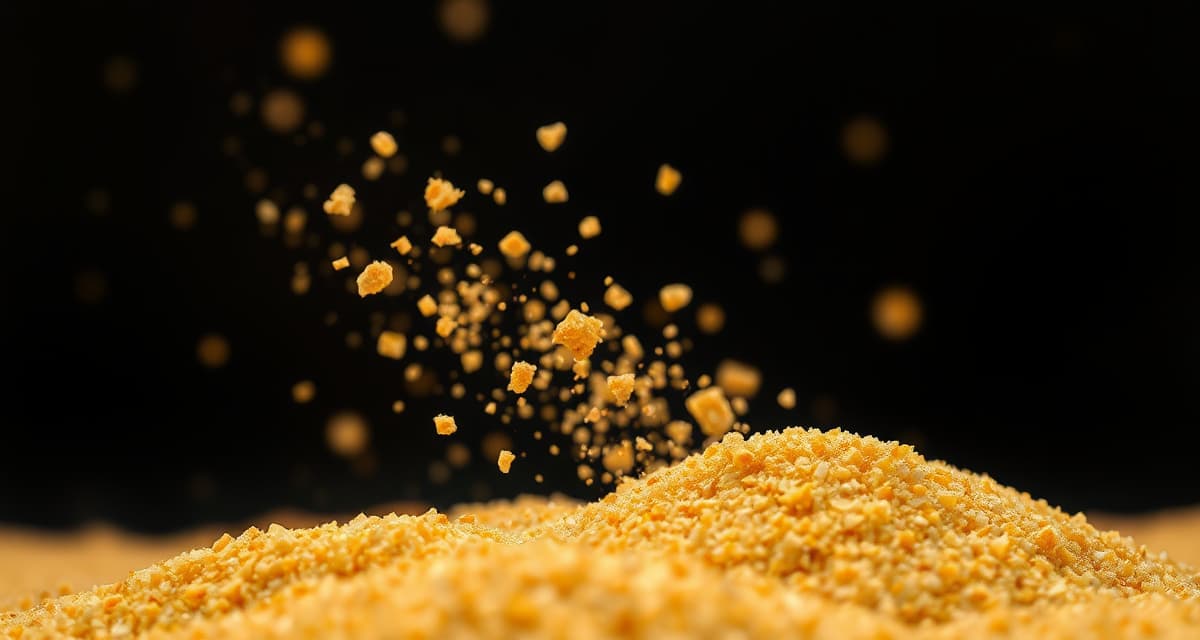
Start with a heap of sand. Remove one grain. Is it still a heap? Obviously, yes. Remove another. Still a heap. Keep going — one grain at a time — and at some point you are left with a single grain of sand. That is clearly not a heap. But at which precise point did the heap stop being a heap?
This is the Sorites Paradox (from the Greek soros, meaning "heap"), and it has been troubling philosophers for over 2,300 years. It was first formulated by Eubulides of Miletus, a 4th-century BCE logician who delighted in constructing arguments that exposed cracks in ordinary reasoning.
The paradox is deceptively simple. It seems to prove, through perfectly logical steps, that there is no such thing as a heap — or alternatively, that a single grain of sand is a heap. Neither conclusion is acceptable, yet the reasoning appears valid. Something has gone wrong. The question is: what?
The Formal Structure
The paradox can be stated precisely:
- A collection of 10,000 grains of sand is a heap.
- If a collection of n grains is a heap, then a collection of n – 1 grains is also a heap.
- Therefore, a collection of 1 grain is a heap.
Premise 1 seems obviously true. Premise 2 seems obviously true — surely removing a single grain cannot transform a heap into a non-heap. But the conclusion is obviously false. In classical logic, a valid argument with true premises cannot produce a false conclusion. So at least one premise must be wrong. But which one?
Why This Matters Beyond Sand
The Sorites Paradox is not really about sand. It is about vagueness — and vagueness is everywhere.
When does a person become old? Is there a precise day when middle age ends and old age begins? When does a fetus become a person? When is someone truly bald? When has a forest been deforested? When does a recession become a depression?
These are not merely semantic games. They are questions with real legal, ethical, and political consequences. Speed limits, legal drinking ages, and poverty thresholds all draw sharp lines through inherently vague territories. The Sorites Paradox exposes the philosophical difficulty lurking beneath every bright-line rule.
Four Attempted Solutions
Philosophers have proposed several responses, none of which is universally accepted:
Epistemicism — defended most rigorously by Timothy Williamson in his 1994 book Vagueness — holds that there is a precise boundary. There is a specific grain whose removal transforms the heap into a non-heap. We simply cannot know which grain it is. The vagueness is in our knowledge, not in reality. This view preserves classical logic but strikes many as deeply counterintuitive. How could the difference between a heap and a non-heap depend on a single grain?
Supervaluationism, developed by Kit Fine (1975), takes a different approach. It says that vague predicates like "heap" can be made precise in many different ways (called "precisifications"), and a vague statement is true only if it comes out true on every acceptable precisification. "10,000 grains is a heap" is true on all precisifications. "1 grain is a heap" is false on all. But for borderline cases — 47 grains, say — there is no determinate truth value. The statement is neither true nor false. This approach preserves much of classical logic but abandons the principle of bivalence (that every statement is either true or false).
Fuzzy logic, pioneered by Lotfi Zadeh in 1965, replaces the binary true/false with degrees of truth. A collection of 10,000 grains is a heap to degree 1.0. A collection of 1 grain is a heap to degree 0.0. Somewhere in between, the degree of heapness gradually decreases. This is mathematically elegant but raises its own puzzles: is the transition from degree 0.73 to degree 0.72 any less arbitrary than a sharp boundary?
Contextualism argues that the extension of "heap" shifts depending on context — who is speaking, what comparisons are salient, what standards are in play. A pile of 50 grains might count as a heap in one conversation and not in another. This approach is pragmatically appealing but can seem like it dodges the underlying metaphysical question.
The Deeper Question
The Sorites Paradox endures because it touches something fundamental about the relationship between language and reality. Our concepts carve the world into categories — tall and short, rich and poor, alive and dead — but the world itself may not come pre-carved. The boundaries we draw are useful, even necessary, but they are not always natural joints in reality.
This does not mean all distinctions are arbitrary. It means that the precision we demand from our categories sometimes exceeds what reality provides. Recognizing this is not intellectual surrender. It is a form of honesty — about the limits of language and the complexity of the world it tries to describe.
Eubulides' heap of sand has been falling, one grain at a time, for two and a half millennia. We still have not found the bottom.