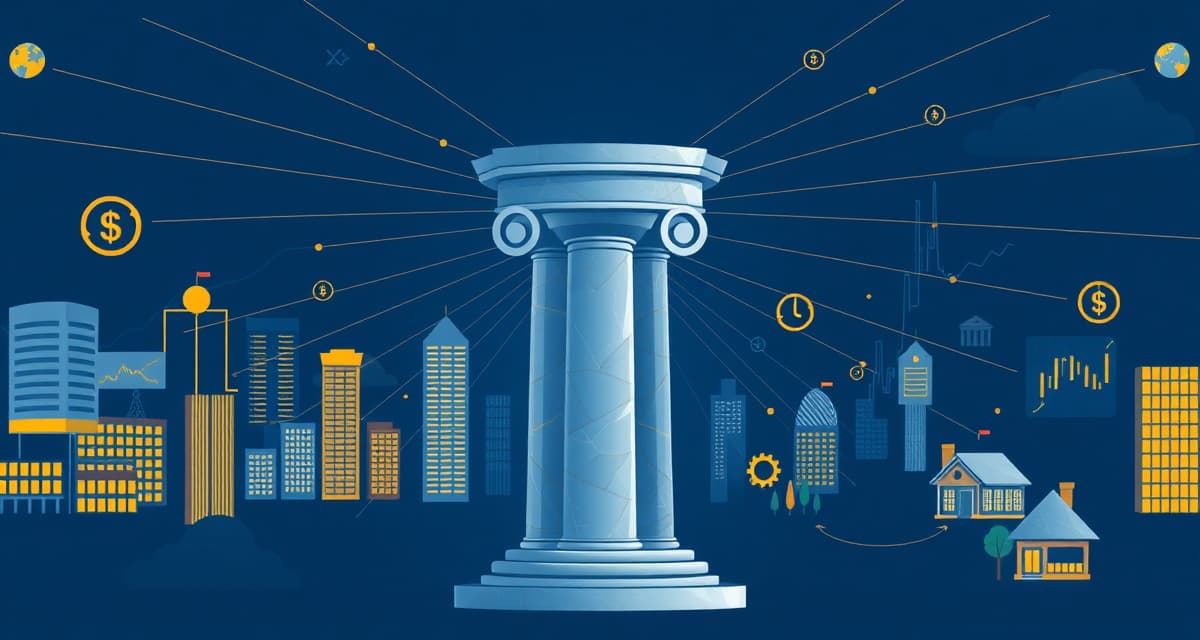
Every financial asset in the world is priced, in part, by comparison to a single number: the yield on a U.S. Treasury bond. Understanding why — and what that number actually represents — is one of the most useful things you can learn about how money works.
What Treasury Bonds Are
When the U.S. government needs money, it borrows by issuing bonds. You lend the government $1,000, and it promises to pay you back with interest. There are several types:
- Treasury bills (T-bills): Mature in 4 weeks to 1 year. Sold at a discount; you get the full face value at maturity.
- Treasury notes (T-notes): Mature in 2 to 10 years. Pay interest (called a "coupon") every six months.
- Treasury bonds (T-bonds): Mature in 20 to 30 years. Same coupon structure, longer time horizon.
- TIPS (Treasury Inflation-Protected Securities): Adjust principal for inflation, so your purchasing power is preserved.
All of these are backed by the full faith and credit of the United States government. In practical terms, this means the chance of default is treated as essentially zero. The U.S. has never failed to pay its debts, and because it borrows in its own currency, it can always print dollars if necessary — though doing so has other consequences.
Why It's Called the "Risk-Free Rate"
In finance, the Treasury yield is called the risk-free rate because it represents the return you can earn with virtually no credit risk. No one seriously expects the U.S. government to fail to repay a Treasury bond.
This does not mean Treasuries carry zero risk. They carry interest rate risk — if rates rise after you buy, the market value of your bond falls. They also carry inflation risk — if inflation outpaces your coupon, your real return is negative. But the specific risk of not getting paid back is, for all practical purposes, zero.
How the Risk-Free Rate Anchors Everything Else
Here is why this matters beyond Treasuries themselves: every other return in finance is measured as a premium above the risk-free rate.
Corporate bonds pay more than Treasuries because companies can default. The difference — called the credit spread — reflects the market's assessment of that additional risk. A blue-chip company might pay 1-2% above the Treasury rate. A high-yield (junk) bond might pay 5-8% above it.
Stocks are expected to return more than bonds over time, and the extra return — the equity risk premium — compensates for the volatility and uncertainty of owning shares in a business. Historically, U.S. stocks have returned roughly 4-6% above the risk-free rate.
Mortgages, car loans, student loans — all are priced relative to Treasury yields. When the 10-year Treasury yield rises, mortgage rates rise. When it falls, they fall. You may not own a Treasury bond, but its yield determines what you pay to borrow.
Corporate investment decisions use the risk-free rate as a baseline. When a company evaluates whether to build a factory, it asks: will this project return more than we could earn just buying Treasuries? If not, the factory does not get built.
The Yield Curve and What It Tells You
Treasury yields at different maturities form what is called the yield curve. Normally, longer-term bonds pay higher yields because locking up your money for more time requires more compensation. A "normal" yield curve slopes upward.
When short-term yields rise above long-term yields, the curve inverts. This has historically been one of the most reliable predictors of recession. An inverted yield curve signals that investors expect interest rates to fall in the future — which usually means they expect the economy to weaken.
The yield curve inverted before the recessions of 1990, 2001, 2008, and 2020. It is not a perfect predictor, and the timing between inversion and recession varies. But it is taken seriously by economists and investors because of its track record.
How to Think About Treasuries in Your Portfolio
For most individual investors, Treasuries serve one or more of three roles:
Safety. If you need money at a specific date — for a home purchase, tuition, or retirement withdrawal — Treasuries held to maturity give you the highest degree of certainty. You know exactly what you will get and when.
Income. In higher-rate environments, Treasuries can provide meaningful, predictable income. A 10-year note yielding 4.5% pays $45 per year on a $1,000 investment, with virtually no default risk.
Ballast. In a diversified portfolio, Treasuries tend to rise in value when stocks fall, because investors flee to safety. This negative correlation makes them useful for reducing overall portfolio volatility.
You can buy Treasuries directly at TreasuryDirect.gov, through a brokerage, or via low-cost ETFs and mutual funds.
The Bottom Line
The Treasury bond is the most boring investment in the world, and that is precisely its power. It establishes the baseline against which every other investment is judged. Understanding Treasuries means understanding the foundation of the financial system — the gravitational constant around which everything else orbits.
You do not need to love Treasuries. But you should understand them, because whether you own them or not, they are already shaping every financial decision you make.