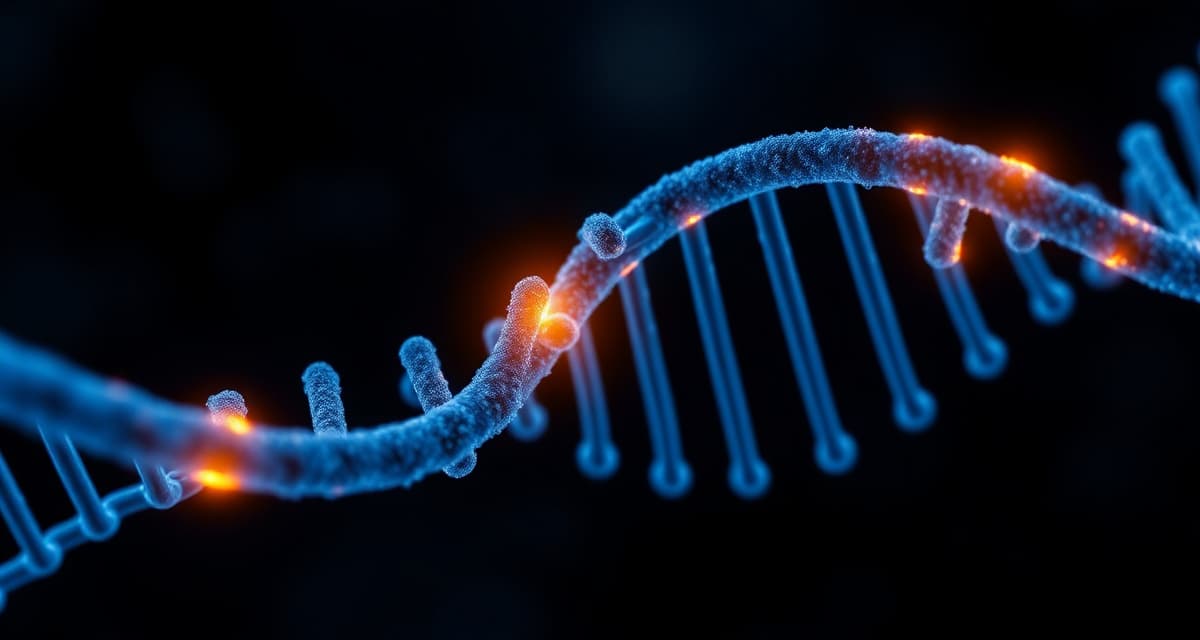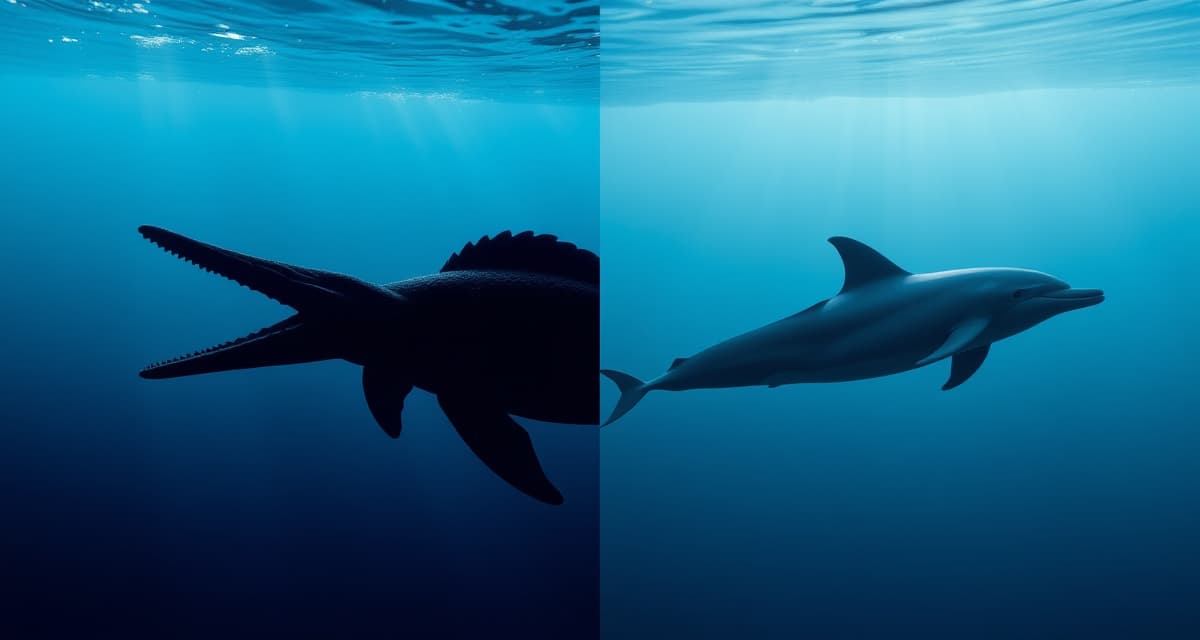
Dolphins and ichthyosaurs — one a mammal, the other an extinct marine reptile — share a body plan so similar that early paleontologists occasionally mistook one for the other. Both are streamlined torpedoes. Both have dorsal fins, pointed snouts, and tails flexed for propulsion. The ichthyosaur's last ancestor in common with the dolphin was a small lizard-like creature living over 300 million years ago. Yet water, evolutionary time, and selection pressure drew both lineages toward almost identical shapes.
Biologists call this convergent evolution: the independent evolution of similar traits in lineages that did not inherit those traits from a common ancestor. It is one of the most revealing patterns in the history of life — a quiet reminder that the space of workable biological solutions is narrower than the space of possible ones.
What Convergence Actually Means
To make the idea precise, biologists distinguish between two kinds of trait similarity:
- Homology — similarity due to common descent. Human arms, bat wings, and whale flippers all share the same underlying skeletal architecture (humerus, radius, ulna, wrist bones) because they all come from a shared tetrapod ancestor.
- Homoplasy (or convergence) — similarity due to independent origin. Bird wings and bat wings are both wings — but their skeletal details are very different, and they evolved from different ancestors. They converged on the wing solution but did not inherit it from a common winged ancestor.
The test is ancestry. If two lineages share a trait that their common ancestor did not have, the trait is convergent. Working this out requires careful phylogenetic reconstruction — comparing morphology, DNA, development — and is one of the central tasks of modern evolutionary biology.
The Classic Examples
Convergence shows up at every level of biology.
Eyes. The camera-type eye — with a lens, an iris, and a retina — has evolved independently at least seven times across animals, including separately in cephalopods (like octopuses) and vertebrates. The eyes look extraordinarily similar. Yet the octopus retina is "right side out" — photoreceptors face the light directly — while the vertebrate retina is "backwards," with blood vessels in front of the photoreceptors, producing the blind spot humans have and octopuses do not.
Flight. Flight has evolved at least four times: in insects, pterosaurs, birds, and bats. Each solution is distinct. Insects use hinged wing plates evolved from gill precursors. Pterosaur wings stretched along a single elongated fourth finger. Bird wings transformed the entire forelimb into a feathered airfoil. Bat wings extend a skin membrane between elongated fingers. Same problem, four independent answers.
Echolocation. Toothed whales (like dolphins) and microbats — distant mammalian cousins — independently evolved sophisticated echolocation. A 2010 comparative genomics study by Yang Liu and colleagues found that both lineages had independently acquired identical substitutions in the prestin gene, which is critical to high-frequency hearing. Selection had independently found the same molecular solution.
Succulence. The cactus family of the Americas and the euphorbia family of Africa look so similar — thick water-storing stems, spines, reduced leaves — that it is common to misidentify one as the other. They are entirely unrelated.
Why It Happens
Convergent evolution happens for the same reason good engineering does: the set of solutions that work is constrained by physics and by chemistry. Streamlined bodies move efficiently through water. Wings need airfoil shape and sufficient surface-to-weight ratio. Eyes need a transparent medium in front of light-sensitive tissue to form images.
The evolutionary biologist Simon Conway Morris, in his book Life's Solution: Inevitable Humans in a Lonely Universe, argues from the pervasiveness of convergence that much of biological form is not accidental: the playing field of viable body plans, sensory systems, and behaviors is narrower than it might first appear. Given enough time and enough selection pressure, similar niches tend to produce similar solutions.
Not every biologist shares his strong conclusions. Stephen Jay Gould, in Wonderful Life, famously argued the opposite — that evolution is contingent, that rewinding the tape of life would yield wildly different results. The honest answer is probably in between. Convergence is widespread, but so is divergence. The tape plays both ways.
How Biologists Spot It
Telling convergence from common ancestry requires more than superficial resemblance. Modern tools have made this easier:
- Phylogenetics. Comparing DNA across many genes lets biologists reconstruct actual family trees. Traits that pop up on distant branches are candidates for convergence.
- Developmental biology. Two structures that look similar but form from different embryonic tissues or use different developmental genes are likely convergent, not homologous. Bird feathers and bat wing membranes are a clear example — they are not "just modified forelimb skin."
- Molecular convergence. In rare cases, the same specific amino-acid substitutions appear independently in distant lineages. This is evidence not only of convergent function but of convergent molecular routes — a striking and relatively new finding enabled by whole-genome sequencing.
What Convergence Teaches Us
Convergent evolution changes the way we should think about life's history. A few lessons stand out:
- Function shapes form, repeatedly. When the same selective pressures return, evolution returns to similar designs. This is not mysticism — it is physics filtering biology.
- The space of good solutions is finite. There are only so many ways to fly, swim, see, or detect prey in the dark. Life keeps rediscovering them.
- Contingency and convergence coexist. The specific lineage that ends up occupying a niche is contingent; the general shape of what fits that niche often is not.
- Similarity is not ancestry. A naïve comparison of resemblance would group dolphins with fish and bats with birds. Only careful analysis reveals who is actually related to whom.
A Closing Picture
Look at an ichthyosaur fossil and a dolphin photograph side by side. Hundreds of millions of years apart. Completely different lineages. Nearly the same body. That resemblance is not a design from a single drawing board. It is what happens when two independent artists work from the same brief: an efficient predator of open water. The brief, written in physics, is shorter than you might think. And life, given long enough, tends to answer it the same way twice.