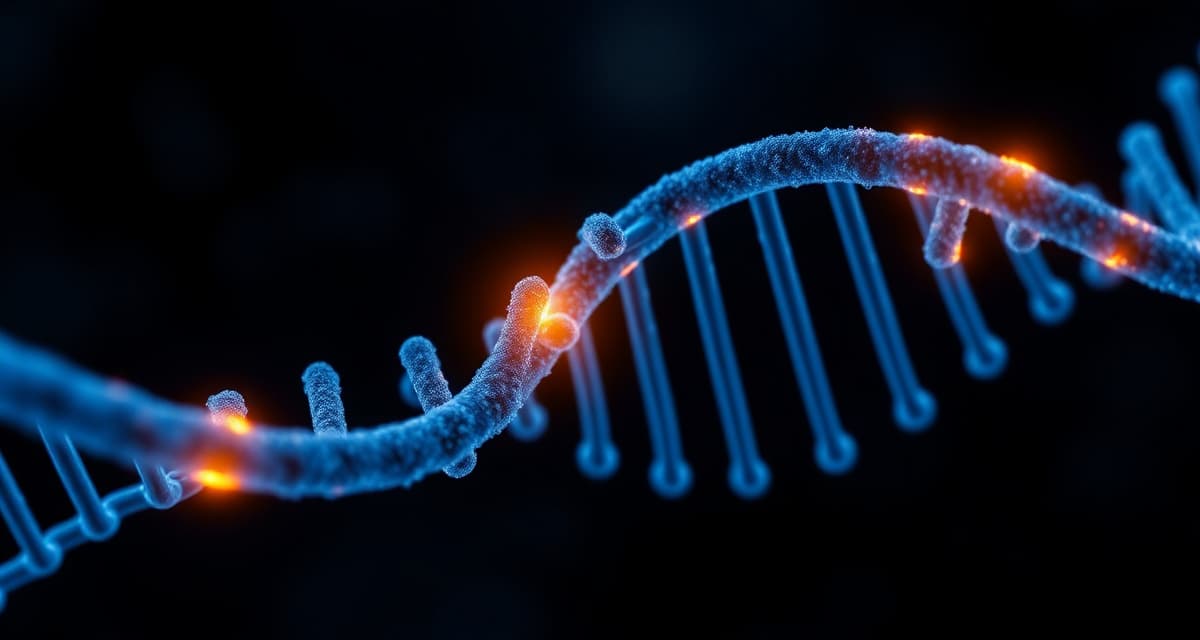
While you've been reading this sentence, about 100 trillion of them have already passed through your body. Most came from the sun. Some came from the Big Bang. A few came from a star that exploded thousands of light-years away, long before there were eyes on Earth to see the explosion.
They are called neutrinos, and they are almost — but not quite — nothing.
The particle that shouldn't have existed
The story begins in 1930 with a problem. Physicists were studying beta decay, a form of radioactive decay in which a neutron turns into a proton by ejecting an electron. When they measured the energy of the emitted electron, the books did not balance. Some energy and momentum seemed to go missing. Either the law of conservation of energy was wrong — which would have been catastrophic — or an undetected particle was carrying off the missing energy.
Wolfgang Pauli, the Austrian theoretical physicist, proposed the latter in a now-famous letter that began, "Dear Radioactive Ladies and Gentlemen..." He apologized for proposing a new particle, calling the move "a desperate remedy." But he believed there had to be a tiny, electrically neutral, nearly massless particle zipping away from each beta decay, invisible to every known detector.
Enrico Fermi gave it a name: neutrino, Italian for "little neutral one." The particle was hypothesized in 1930. It was not directly detected until 1956 — twenty-six years later. That is how hard they are to catch.
Why they are so hard to detect
Neutrinos are the ghosts of the particle world. They have no electric charge, almost no mass (less than one-millionth the mass of an electron), and interact only through the weak nuclear force and gravity. Unlike every other particle you've heard of, they ignore electromagnetism entirely. They can pass through a lead wall many light-years thick and come out the other side unchanged.
Here is a concrete scale for how rarely neutrinos interact with matter. Of the trillions of solar neutrinos passing through your body every second, roughly one will interact with one of your atoms over the course of your entire life. That is the interaction rate. They are unimaginably aloof.
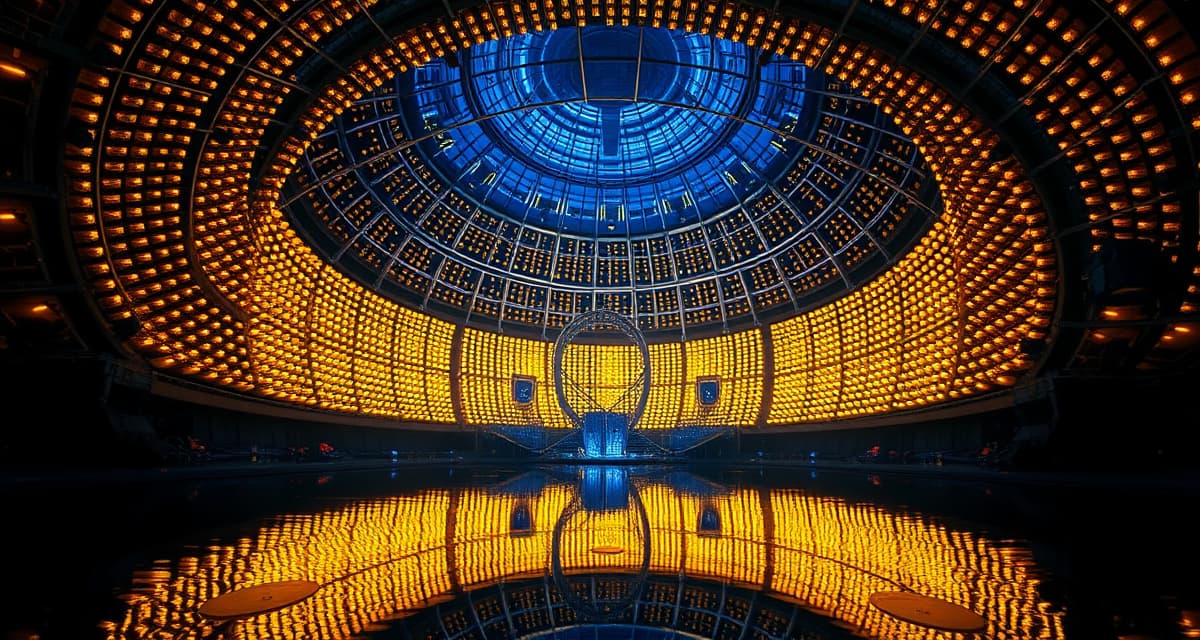
And yet, because there are so many of them, detectors can catch a few. The trick is to build something very large, very clean, and very patient. The famous Super-Kamiokande detector in Japan holds 50,000 tons of ultra-pure water deep underground; the IceCube neutrino observatory is a cubic kilometer of instrumented Antarctic ice. Both wait for the rare flash of light emitted when a passing neutrino happens to strike an atom.
Three flavors, and a mystery
Neutrinos come in three "flavors," each associated with one of the charged leptons: the electron neutrino, the muon neutrino, and the tau neutrino. The Standard Model of particle physics, for decades, assumed they were all massless.
Then something strange happened. In the late 1990s, physicists at Super-Kamiokande and the Sudbury Neutrino Observatory in Canada discovered that neutrinos produced as one flavor could spontaneously change into another flavor in flight. This phenomenon, called neutrino oscillation, is one of the cleanest experimental findings in modern physics — and it turned out to require that neutrinos have mass, even if only a very small amount.
This was, quietly, one of the most important discoveries of the last fifty years. It is the only confirmed experimental observation that shows the Standard Model is incomplete. The 2015 Nobel Prize in Physics went to Takaaki Kajita and Arthur McDonald for leading the experiments that established it.
The cosmic neutrinos you cannot feel
The sun is, by volume, the largest neutrino source most of us care about. Nuclear fusion in the sun's core produces a torrent of electron neutrinos that stream outward through the sun's body in about two seconds and reach Earth eight minutes later. About 65 billion solar neutrinos per square centimeter per second cross Earth's daylit surface. On the night side, they arrive from below, having passed through the entire planet without noticing it was there.
Other neutrino sources:
- Cosmic rays striking the upper atmosphere produce atmospheric neutrinos.
- Earth's own radioactive decay produces "geoneutrinos" — which have been measured and used to estimate how much of Earth's internal heat comes from radioactive isotopes versus leftover heat from the planet's formation.
- Supernovae release most of their energy as neutrinos. In 1987, a nearby supernova (SN 1987A) sent a brief burst of neutrinos through Earth that was detected by three separate underground experiments — the first and only time a supernova has been observed directly in neutrinos.
- The Big Bang left behind a cosmic neutrino background, analogous to the cosmic microwave background but far older — emitted when the universe was about one second old. It has not yet been directly detected, but its influence on the universe's evolution is measurable.
Every cubic centimeter of empty space contains, on average, about 336 leftover Big Bang neutrinos. They are whispering reminders of the universe's first second.
Why astronomers love them
Light, which astronomers have used for centuries, has one big problem: it gets absorbed and scattered. The light reaching your eye from the sun's surface has taken roughly 100,000 years to escape the sun's interior. The light from a supernova is filtered through clouds of gas and dust that change its color and direction.
Neutrinos don't care. They pass through essentially everything. A neutrino produced in the sun's core reaches Earth in eight minutes. A neutrino produced in a supernova escapes its dying star before the shockwave even reaches the surface. This makes neutrino astronomy a way to see inside things that light can only show the outside of.
In 2017, the IceCube detector traced a high-energy neutrino back to a specific galaxy hosting a blazar — a supermassive black hole firing a jet of matter and radiation nearly at us. It was the first time a cosmic particle had been tied to a specific astrophysical source other than the sun or a supernova. Multi-messenger astronomy — combining light, gravitational waves, and neutrinos — is one of the most exciting frontiers in physics.
What we don't yet know
Several fundamental neutrino questions remain open:
- How much do they weigh, exactly? We know they have mass, but not the individual masses of each flavor.
- Are they their own antiparticle? If neutrinos are "Majorana particles," that would point to physics beyond the Standard Model and may be connected to the question of why the universe contains more matter than antimatter at all.
- Is there a fourth flavor? Some anomalous experimental results have hinted at a hypothetical "sterile neutrino" that interacts only through gravity, but the evidence is not yet conclusive.
Ghost particles, but not uninteresting ones
It is tempting to dismiss neutrinos as irrelevant. They don't glow, they don't push anything around, they don't participate in any of the familiar interactions that build the world of atoms and chemistry. They are the quietest citizens of the particle zoo.
But they also carry more particles-per-universe than almost anything else. They contain information about the deep past, the deep sun, and the distant supernovae no light can show us. They forced physics to rewrite a chapter of the Standard Model. And they are, at this moment, streaming silently through you — a sky full of messengers that almost nothing can stop.
He counts the number of the stars; he gives to all of them their names. (Psalm 147:4)
The universe, it turns out, has many more messengers than meet the eye. Some of them are passing through you right now.