When you remember the smell of your grandmother's kitchen, the words to a song you have not heard in twenty years, or where you parked the car this morning, something physical is happening in your brain. The memory is not stored in a soul or a metaphor. It is stored in molecules — specific proteins, at specific synapses, arranged into specific patterns of strength.
The science of how molecules store experience is one of the great projects of modern neuroscience, and over the last fifty years it has made startling progress. We now know enough about the chemistry of memory to begin telling the story of how a moment in time becomes a lasting change in matter.
The Synapse Is the Unit
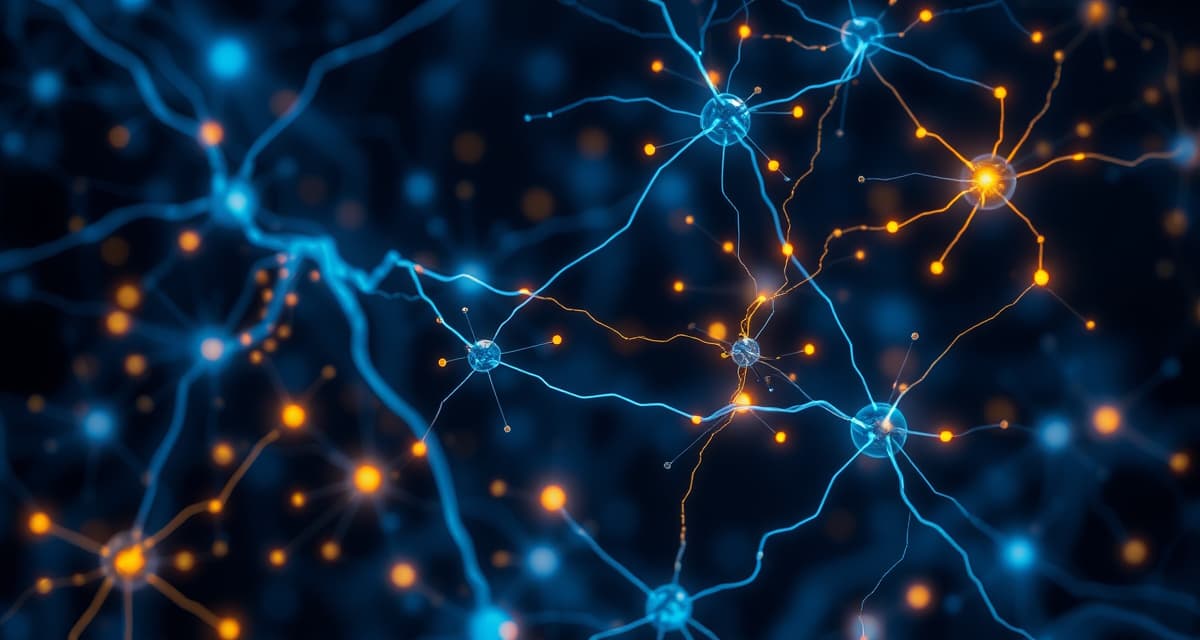
Your brain has roughly 86 billion neurons, each of which connects to thousands of others through specialized junctions called synapses. The total number of synapses is estimated at more than 100 trillion. When you remember something, the substrate of that memory is not a single neuron firing. It is a pattern of synaptic connections — a network — that has been physically modified by an experience.
This was first proposed in 1949 by the Canadian psychologist Donald Hebb, who summarized the idea in a phrase now drilled into every undergraduate neuroscience class: "Cells that fire together, wire together." When two connected neurons fire in close temporal sequence, the synapse between them strengthens. Repeat the pattern, and the strengthening becomes durable. Hebb did not know the molecular mechanism. He proposed it must exist. It took the next half-century to find it.
Long-Term Potentiation
In 1973, Terje Lømo and Tim Bliss, working at the Norwegian Institute in Oslo, observed something remarkable in slices of rabbit hippocampus. After delivering a brief, high-frequency train of electrical stimulation to a particular pathway, they found that the synapses on that pathway became persistently more responsive — for hours, in some cases days. They called the phenomenon long-term potentiation, or LTP. It is now considered the cellular mechanism of memory.
LTP is exactly what Hebb predicted: a lasting strengthening of synaptic connections produced by patterns of correlated activity. Within decades it became clear that LTP, or close cousins of it, is found throughout the mammalian brain. It is the closest thing neuroscience has to a fundamental "switch" by which experience modifies neural circuitry.
The NMDA Receptor: The Detector of Coincidence
What makes LTP possible at the molecular level is a remarkable protein called the NMDA receptor. Named for the chemical (N-methyl-D-aspartate) that activates it in the lab, the NMDA receptor sits in the membrane of receiving neurons and acts as something close to a coincidence detector.
Two things have to happen at the same time to open it:
- The presynaptic neuron must release the neurotransmitter glutamate, which binds to the receptor.
- The postsynaptic neuron must already be electrically depolarized, releasing a magnesium ion that ordinarily blocks the channel.
Only when both signals coincide does the NMDA receptor open and allow calcium ions to flow into the postsynaptic cell. That calcium influx is the trigger for everything that follows. It is, in effect, the molecular handshake that says: something correlated just happened — strengthen this connection.
The Cascade That Makes the Memory Stick
The brief calcium spike inside the receiving neuron sets off a cascade of biochemical events. Several enzymes — particularly one called CaMKII (calcium/calmodulin-dependent protein kinase II) — become activated. CaMKII has a property that makes it almost made for memory: once activated, it can phosphorylate itself, holding itself in the active state long after the calcium signal has passed.
Activated CaMKII does several things. It strengthens existing AMPA receptors at the synapse — the proteins that handle moment-to-moment glutamate signaling — making the synapse more responsive. It triggers the insertion of additional AMPA receptors into the synaptic membrane, increasing capacity. And, crucially, it can initiate a longer-term program of structural change.
For a memory to last more than an hour or so, new proteins must be made. Experiments by Eric Kandel and others — work that earned Kandel the Nobel Prize in 2000 — showed that blocking protein synthesis shortly after a learning event prevents the formation of long-term memory. The signal cascade reaches the cell nucleus, activates a transcription factor called CREB, and turns on a suite of genes whose products literally remodel the synapse: building new receptor proteins, growing new dendritic spines, in some cases creating entirely new synaptic connections.
A memory, at this scale, is a piece of physical architecture.
The Two Phases
Neuroscientists distinguish two broad phases of memory at the molecular level:
Early-phase LTP lasts one to three hours and depends on modifying proteins that already exist at the synapse — strengthening receptors, opening channels. It does not require new protein synthesis. This is roughly the timescale of short-term and working memory.
Late-phase LTP can last days to a lifetime and requires new protein synthesis. It involves CREB-mediated gene expression, the construction of new synaptic machinery, and often actual structural changes — new spines on dendrites, expanded synaptic surfaces. This is the chemistry of long-term memory.
The transition between the two — the conversion of a fleeting pattern of activity into a durable physical change — is called consolidation. It happens partly during the hours immediately after learning, and crucially, much of it happens during sleep. The reason sleep deprivation impairs memory is not vague; it is that sleep provides the conditions under which consolidation occurs.
Where Memories Live
Different kinds of memory live in different parts of the brain. The hippocampus is critical for forming new declarative memories — facts and events. Patients who lose hippocampal function (most famously the patient known as H.M., whose case Brenda Milner studied for decades) cannot form new memories of new experiences, even though their older memories remain. The hippocampus is necessary for creating memories but not necessarily for storing them long-term — over weeks and months, memories appear to migrate to the cortex, where they become independent of hippocampal function.
Other forms of memory — motor skills, emotional associations, classical conditioning — depend on different structures (the cerebellum, the amygdala, the basal ganglia). The chemistry of LTP-like plasticity appears in all of them, with variations on the same molecular themes.
What Recent Work Has Added
The last twenty years have produced striking advances:
Engram cells. Susumu Tonegawa's lab at MIT has shown that specific subsets of neurons — "engram cells" — are activated during a learning experience and re-activated when the memory is recalled. Optogenetically reactivating these cells in mice can artificially trigger the recall of a fear memory. The physical trace of a memory can be located and turned on.
Reconsolidation. Memories are not as stable as we used to think. When a memory is recalled, it briefly enters a labile state and must be re-stabilized through new protein synthesis. This means each act of remembering can subtly modify the memory itself — a finding with deep implications for eyewitness testimony and trauma therapy.
Memory editing. Experiments using drugs that block reconsolidation have shown that specific memories can be selectively weakened — or, in mice, surgically erased — while leaving other memories intact. The clinical implications, especially for PTSD, are a major area of current research.
The Picture We Have
A memory is not a recording. It is a pattern of strengthened synaptic connections, encoded by molecular cascades initiated by calcium influx through coincidence-detecting NMDA receptors, stabilized by activated CaMKII, made permanent by CREB-driven gene expression and structural remodeling, and re-activated each time you recall the experience — at which point the cycle begins again, and the memory is, in subtle ways, written anew.
Every time you remember your grandmother's kitchen, you are running a chemical program that involves billions of synapses, calcium ions in microscopic quantities, proteins folded with extraordinary precision, and patterns of activity that, in some sense, are the memory. The molecules that store your past are working right now, as you read this, to lay down a memory of having read it.
That is the chemistry of remembering — and one of the most beautiful things modern science knows about what it is to be a creature with a past.